What Is a Digital Voice Fingerprint — and Why One Voice Can Read Any Text
When you hear an AI voice, it feels as if a “recording” of that person is stored somewhere and words are cut out of it. In reality it works quite differently — and far more elegantly. A voice is stored as a digital fingerprint: a compact imprint of its timbre. Let’s look at what that is, why it matters and how it lets one voice read text the speaker never actually said.
A voice is not a “recording of phrases”
Old text-to-speech systems glued speech together from pre-recorded snippets — that is why they sounded mechanical. Modern synthesis works differently. The engine “listens” to a speaker once and extracts what matters most — the character of the timbre: pitch, colour, manner. It compresses all of that into a small mathematical imprint.
What a digital fingerprint is
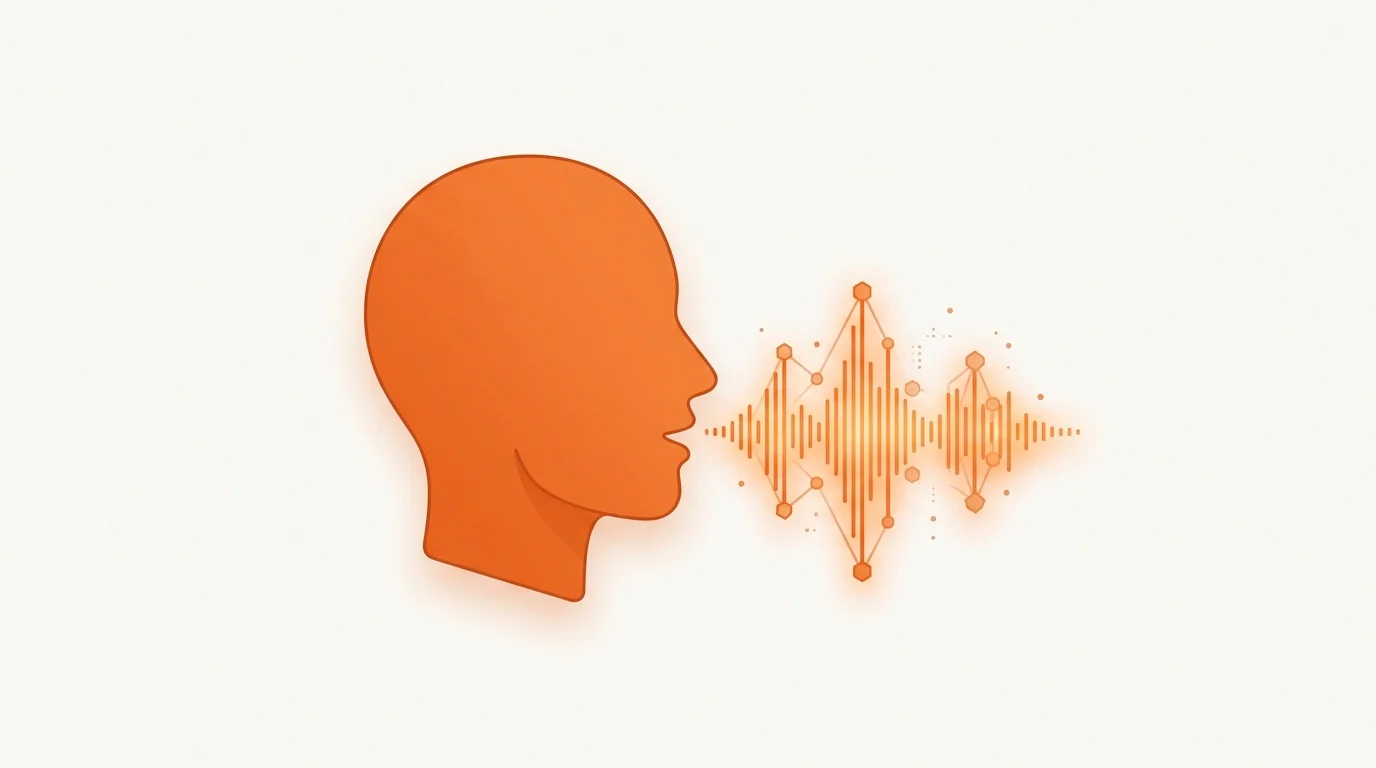
The fingerprint (engineers call it a voice vector) is a few kilobytes of numbers that describe what makes your voice different from any other. Not words, not phrases — pure recognisability. An analogy: a fingerprint does not store the whole hand, yet it uniquely identifies a person. The same here: the imprint stores no speech, but it uniquely defines how the voice sounds.
A voice in the catalog is not an archive of recordings but a timbre fingerprint about the size of a small image. That is why one voice can read any text: the engine takes the imprint and “speaks” new words with it.
Why it matters: one engine, hundreds of voices
Since a voice is a compact fingerprint, you can keep a whole bank of them and plug each one into the same engine. There is no separate “model” per voice — one shared engine plus a bank of imprints. This has practical consequences:
- Many voices, one engine — the catalog grows without bloating the infrastructure.
- A new voice is added quickly — you only need to build its fingerprint; see how a voice is born.
- Your voice stays private — the fingerprint of your own voice lives only in your account.
What about intonation and emotion?
The fingerprint defines the timbre — who is speaking. How they speak (pace, pauses, stress, emotion) the engine builds on the fly from the text and your settings. That is why the same voice can sound calm in an audiobook and upbeat in an ad — same timbre, different delivery.
Ethics and consent
Because a fingerprint uniquely defines a voice, it counts as personal data — that is exactly how the GDPR treats it. You may build a fingerprint only from your own voice, or with the explicit consent of the person the voice belongs to. Someone else’s voice without consent is off limits: that is both what the GDPR requires and what the HancVoice rules say.
Conclusion
The digital fingerprint is the reason modern speech synthesis sounds alive and scales: a voice is stored not as a mountain of recordings but as a compact imprint of recognisability. One engine, a bank of fingerprints — and any text in any of hundreds of voices. Browse the catalog and hear it for yourself.
Try it yourself — a free starter character pack when you sign up.