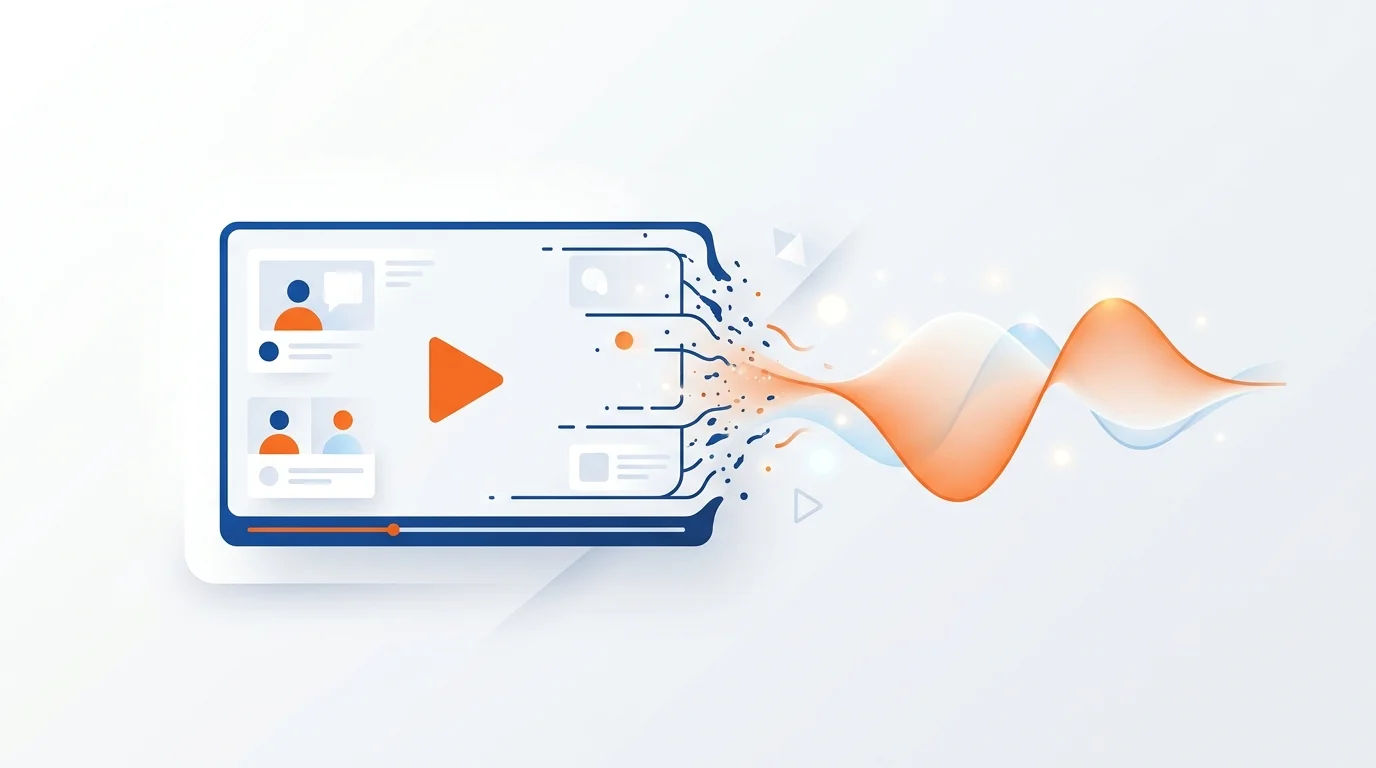
How a voice is born: from source speech to a catalog card
You open the voice catalog, press play — and hear a clean, lifelike timbre. It feels as if the voice is simply “there”. In reality, every voice is the product of a multi-stage pipeline: from selecting the source speech to the final mastering. Here is how a voice is born at HancVoice — no magic, step by step.
Step 1. Where the source speech comes from
A voice is not invented from scratch — it grows out of real human speech. The sources are open and licensed speech datasets whose recordings can be used legally. The key rule: we never recreate the voice of a real person without their consent. If you create your own voice, you upload your own sample and confirm your consent — in line with the GDPR. Without consent, the system will not build a model.
Step 2. Selection: not every recording makes the cut
The first filter is the quality of the source material. Before building a voice, the pipeline checks the recording for “presence”: is there enough clean, intelligible speech, and is it free of background noise, music and dropouts? Recordings that fail this gate are discarded immediately — dragging weak material further down the pipeline is pointless: the flaws would surface in the final result anyway.
Step 3. The digital fingerprint of the timbre
Next, the engine listens to the selected speech and builds a compact digital fingerprint of the voice — a mathematical description of the timbre only a few kilobytes in size. It is what stores everything that makes a voice recognizable: pitch, color, character. All these fingerprints go into a shared bank, and at synthesis time the engine picks the right one and “speaks” any text with it. One engine — hundreds of voices, each with its own fingerprint.
A voice in the catalog is not a set of recorded phrases but a timbre fingerprint. That is why one voice can read any text — even one the original speaker never said.
Step 4. Quality control: how we measure “cleanness”
Hearing is subjective, so we also measure quality. A synthesis preview of every new voice runs through a neural assessment of audio cleanness: it produces an objective score — how clean the voice sounds, free of noise and artifacts. The score is adjusted for the language, because “clean” sounds different in German than, say, in Japanese. Voices below the threshold never reach the shelf — they are sent back for rework or rejected.
Step 5. Mastering: so everything sounds even
The last stage brings every voice to a common denominator. Loudness is equalized and the sound is normalized, so the catalog has no “quiet” or “shouting” voices and you can compare timbres on equal footing. It is the same logic as mastering in music: technically everything is ready, but it is the even finish that separates a professional result from a raw one.
Step 6. The catalog card: language and tier
The finished voice gets a card with gender, language and a timbre description — and enters the catalog only after a manual review. This is also where the language tier appears:
- Core languages — the heart of the engine with a quality guarantee: German, English, French, Spanish, Italian, Portuguese, Russian, Chinese, Japanese and Korean.
- Beta — the language already works via auto mode, but we are still polishing the quality.
- Coming soon — the language is in development: we are selecting speakers and tuning the synthesis.
A language “graduates” from beta not on a schedule, but once it consistently passes the same quality control as the core languages. We explain why tiers exist at all in “Why languages have tiers”, and you can follow which languages are in progress — and vote for the next ones — in the Lab.
Why this matters to you
This whole pipeline exists for one simple reason: so that you open the catalog, press play and hear a clean voice — not noise and artifacts. Selection at the entrance, objective quality control and even mastering are why HancVoice voices sound predictably consistent, rather than “hit or miss”.
Conclusion
A voice is born long before the moment you pick it — on a pipeline of selection, a timbre fingerprint, quality control and mastering. That is exactly why languages have tiers and the catalog has consistent quality. Open the catalog and listen: now you know what stands behind every play.
Try it yourself — a free starter character pack when you sign up.