AI Voice-Over vs a Human Narrator: When to Choose Which
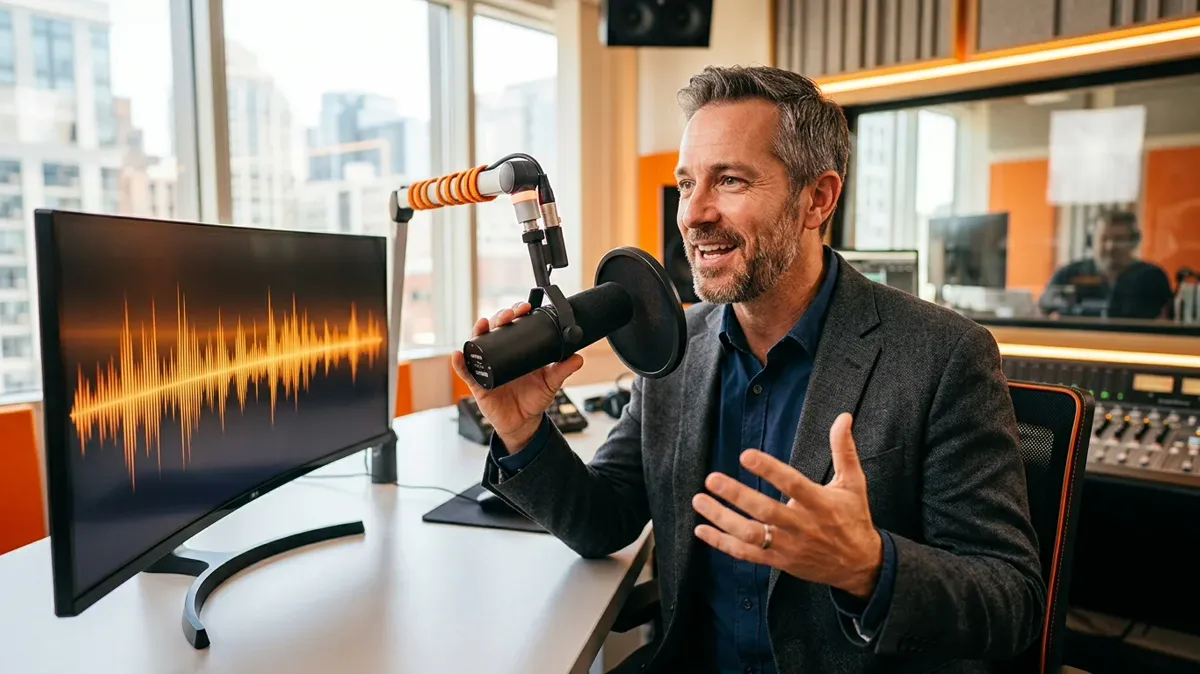
Just a couple of years ago the choice was obvious: a serious project meant a human narrator, everything else was left "to chance". Today AI voice-over has become natural enough for most regular formats. But that does not mean a human voice is no longer needed.
Let's be honest about it: where AI already wins, where a human narrator is still irreplaceable, and how to make the decision by the task rather than by gut feeling.
Where AI voice-over already wins
For informational and regular content, AI often gets the job done faster and cheaper than a studio. Modern models place stress and pauses according to the meaning of a sentence rather than mechanically, so the speech sounds natural even across long texts.
- Voice-over for YouTube and social media, reviews, and tutorial videos
- Audiobooks and non-fiction with an even intonation across the whole book
- Podcasts, digests, and audio versions of articles
- IVR, voice menus, and notifications
The main advantage is not even the price, but speed and repeatability. An edit to the script does not require a new studio session: you change the text and regenerate the fragment you need.
If content comes out regularly, the bottleneck is not the idea but production. AI removes exactly that.
Where a human narrator is still ahead
There are formats where what matters is not clarity but a unique acting delivery — and here a human is still stronger:
- Image advertising, where the voice is part of a brand's identity
- Dramatic performance with emotion: theatre, complex characters
- Live broadcasts and improvisation
That said, the boundary is shifting fast: for most commercial spots, AI already delivers a result that passes without questions.
How to work out the economics
A simple rule: count how many variants and edits your project needs. If the voice-over is done once and for good, the difference from a narrator is small. But if you test wordings, release content in series, or localise into several languages, AI wins many times over on cost and timelines.
A good approach is a hybrid: do the routine and the drafts with AI, and hand flagship spots to a human narrator when needed. That way the budget goes where it is genuinely noticeable.
Conclusion
AI voice-over has stopped being a compromise and become a working tool for most tasks. A human voice remains where it is the personality itself that sells. And the choice between them is no longer a question of quality, but a question of the task and the economics.
Try it yourself — a free starter character pack when you sign up.